Deep plane facelift cost in Turkey
All-inclusive deep plane facelift prices in Istanbul start at $15,000 and typically reach $20,000. Here is exactly what that covers, how the technique differs from a SMAS lift, who it suits, and what to check before you book in 2026.
Medically reviewed by Dr. Safa Manav, MD, FEBOPRAS, Facial Rejuvenation Plastic Surgeon · Last reviewed August 2026
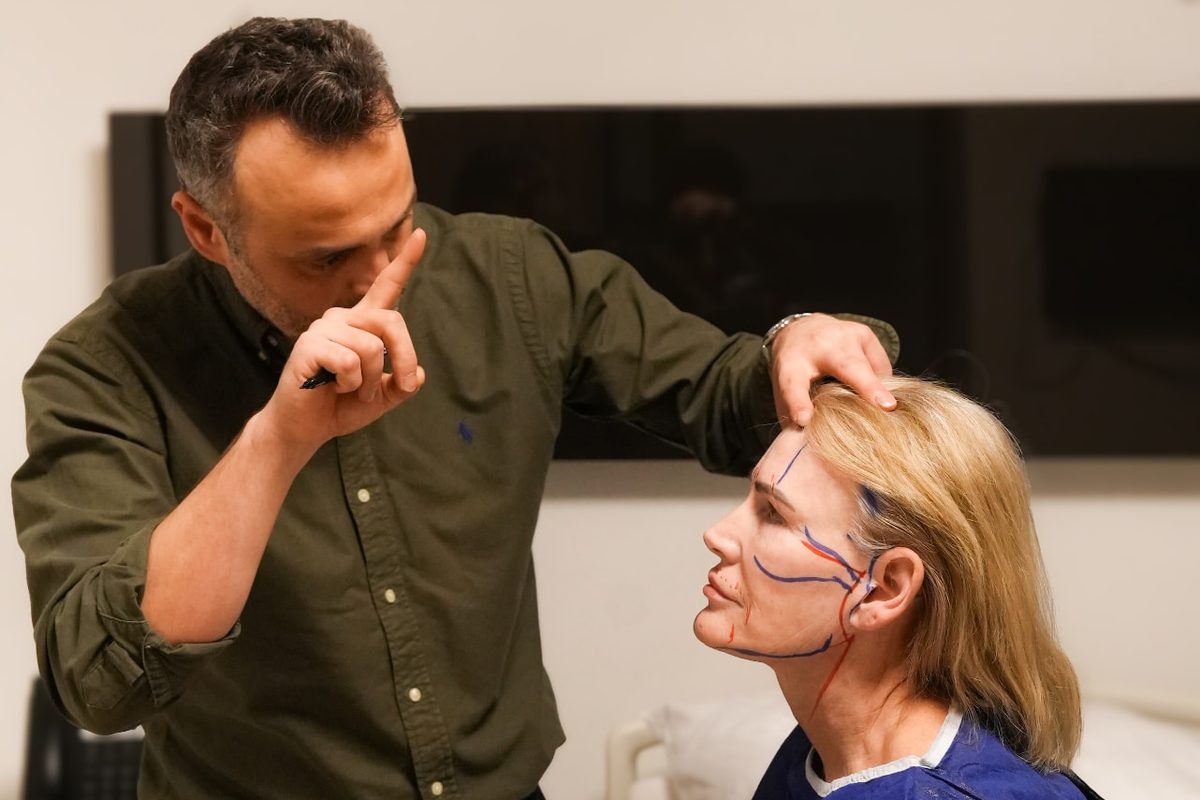
What a deep plane facelift actually does
Every facelift works on two layers: the skin, and the SMAS — the fibromuscular layer beneath it. Most techniques tighten the SMAS by folding or trimming it and then re-drape the skin on top. A deep plane facelift works differently: the surgeon dissects under the SMAS, releases the retaining ligaments that anchor the face, and repositions skin, fat and muscle together as one unit.
Because the lift happens at the structural level, the skin carries no tension. That is why deep plane results tend to look unoperated — no wind-swept tightness — and why the improvement typically holds for 10–15 years rather than 8–10.
It is also why the technique is demanding. The dissection plane sits close to the facial nerve branches, so this operation belongs exclusively with surgeons who have dedicated deep-plane training and a documented annual case volume — not a surgeon who "also offers" it.
Why patients choose Istanbul for deep plane facelifts
Deep plane facelift is one of the most technically demanding facial procedures, and it is also one of the most expensive in the US, UK and Western Europe. In Istanbul the same technique is performed by board-certified, European-board facial surgeons in internationally accredited hospitals — at a fraction of the cost.
Medolea matches you to surgeons who document their deep-plane training and case volume, not generalists who "also offer" the technique. The package is all-inclusive: surgeon and theatre fees, general anesthesia, hospital stay, medication, VIP transfers and aftercare.
Less than US/UK surgeon-only fees
Typical stay in Istanbul
Typical result longevity
Multiple surgeon options compared
Deep plane vs SMAS facelift
| Aspect | SMAS facelift | Deep plane facelift |
|---|---|---|
| Tissue layer | Tightens the SMAS layer by folding or trimming | Releases retaining ligaments and repositions skin, fat and muscle as one unit |
| Best for | Moderate jawline and cheek laxity with reasonable skin quality | Heavier mid-face descent, jowling, or laxity returning after an earlier lift |
| Result character | Reliable jawline improvement; less powerful on deep mid-face laxity | More natural mid-face lift with less tension on the skin |
| Longevity | Typically 8–10 years | Typically 10–15 years |
| Recovery | Presentable at roughly two weeks | Longer swelling phase; presentable at two to three weeks |
| Surgeon requirement | The most widely taught facelift approach | Requires dedicated deep-plane training and documented case volume |
Recovery, week by week
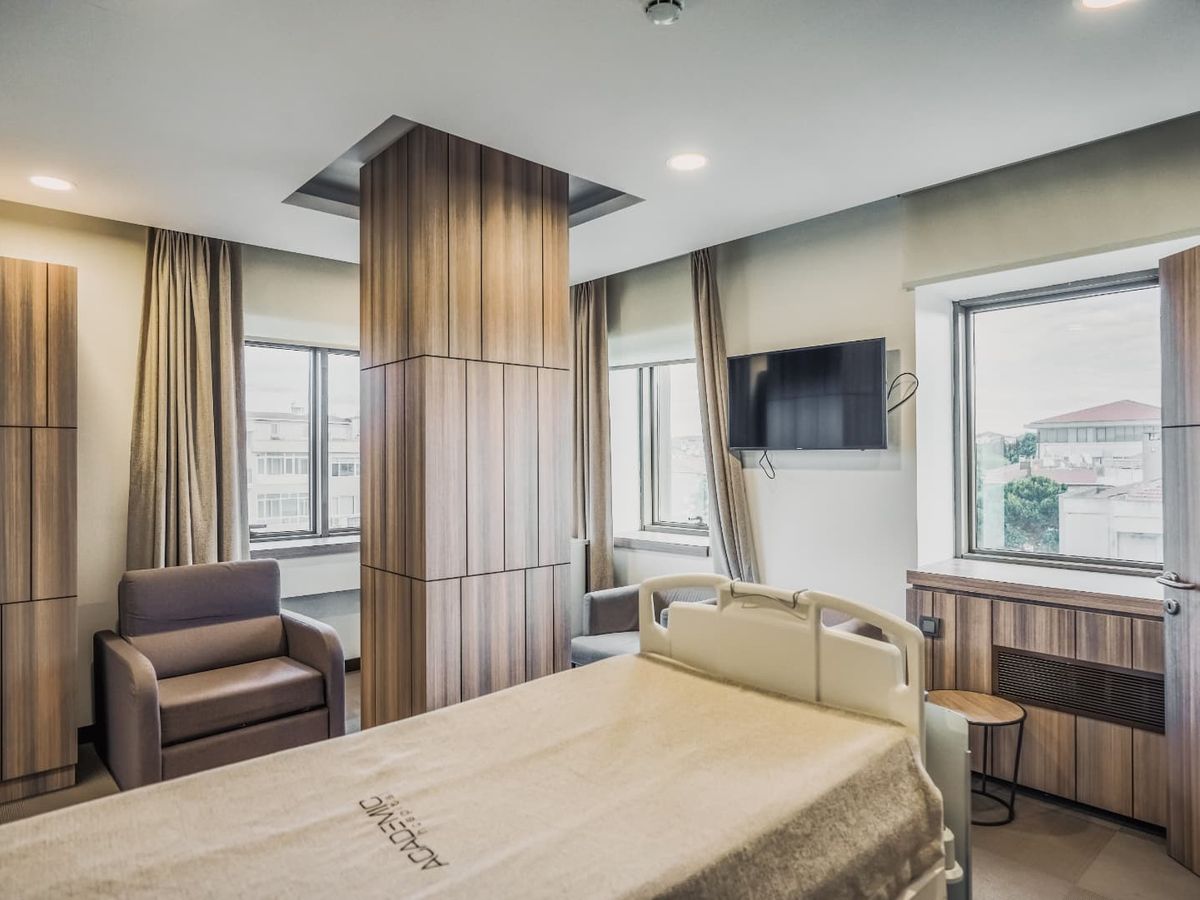
Deep plane recovery follows the same arc as any facelift, with a slightly longer swelling phase. Plan 7–10 nights in Istanbul so suture removal and the fit-to-fly check happen before you travel.

- Days 1–3
Peak swelling and bruising; head elevated, short walks every few hours
- Days 4–7
Bruising fades; wound check and suture removal in Istanbul
- Days 7–10
Fit-to-fly clearance when healing is on track; fly home with a written aftercare plan
- Weeks 2–3
Most patients feel presentable; back to desk work
- Weeks 3–6
Contour becomes recognisable; light exercise resumes
- Months 3–12
Scars soften and refinement continues; daily SPF 50+
What a deep plane facelift costs in Turkey
Because it is a longer and more technically demanding operation, a deep plane facelift sits in the upper half of our all-inclusive range — typically $15,000–$20,000, including surgeon and theatre fees, general anesthesia, hospital stay, medication, VIP transfers and aftercare. Combined with a neck lift — the most common pairing — it becomes the comprehensive face and neck rejuvenation many patients are actually looking for.
For the full breakdown of what moves facelift pricing, see our facelift cost in Turkey guide. For your own number, the calculator below prices your exact combination against your surgeon-credential preferences.
What the $15,000–$20,000 deep plane package covers
| Item | Included? |
|---|---|
| Surgeon and operating theatre fees | Yes |
| General anesthesia and anesthesiology team | Yes |
| Overnight hospital stay and nursing care | Yes |
| Post-operative medication and dressings kit | Yes |
| VIP airport, hotel and hospital transfers | Yes |
| In-person follow-up and fit-to-fly clearance | Yes |
| Remote follow-up after you return home | Yes |
| Flights to Istanbul | No — you book separately |
| Travel insurance with elective-surgery cover | No — strongly recommended |
The exact figure within the $15,000–$20,000 interval depends on the surgeon's credentials, whether a neck lift or other procedures are combined, and your hotel preference. A binding quote follows the surgeon's review of your photographs.
How to verify a deep plane facelift surgeon
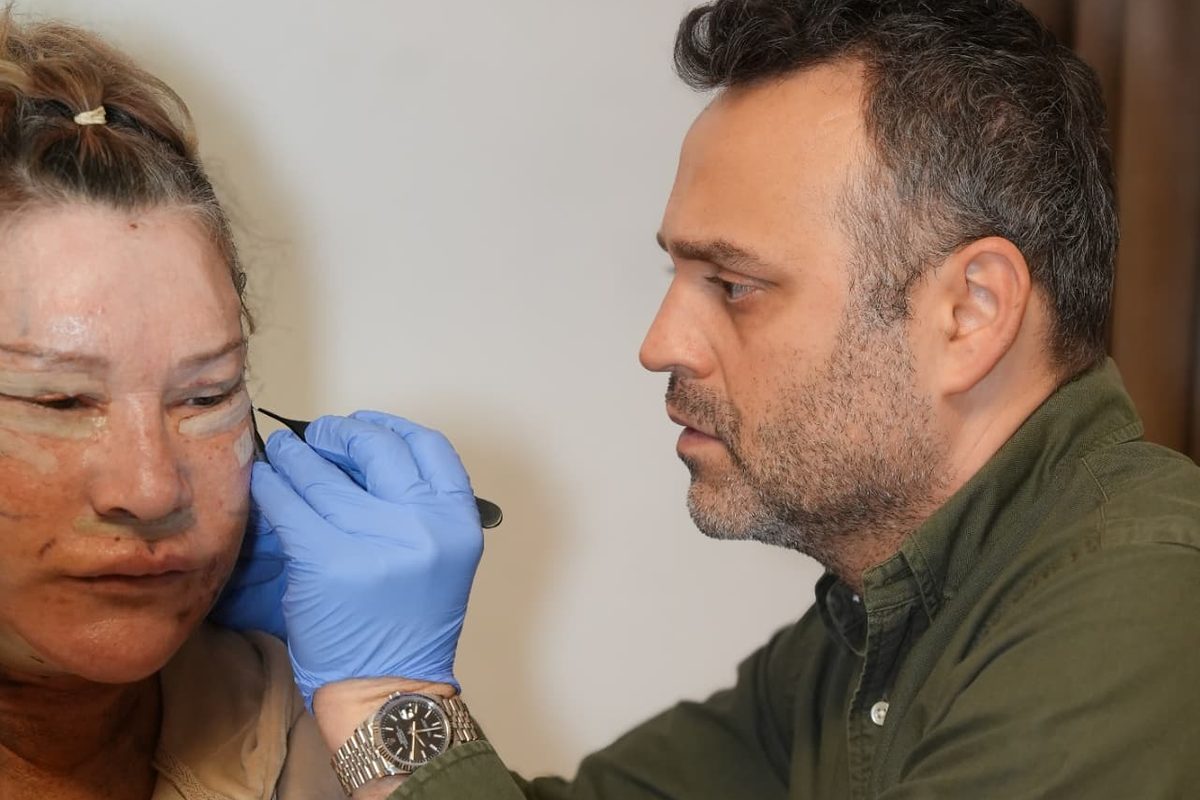
Not every facelift surgeon is trained in the deep plane technique. Because the dissection runs beneath the SMAS and near the facial nerve branches, this operation requires dedicated training and a documented case volume. Ask any surgeon these questions in writing before you commit.
- —Where did you train specifically in deep-plane dissection?
- —How many deep plane facelifts do you perform each year?
- —Can I see unedited before-and-after sets at day 1, month 3, month 6 and year 1?
- —Are you board certified in plastic surgery and a member of ISAPS, EBOPRAS or ASPS?
- —At which accredited hospital will the surgery and overnight stay take place?
- —Who is the anesthesiologist, and will I stay overnight under nursing care?
- —What is included in writing, and what are the revision terms?
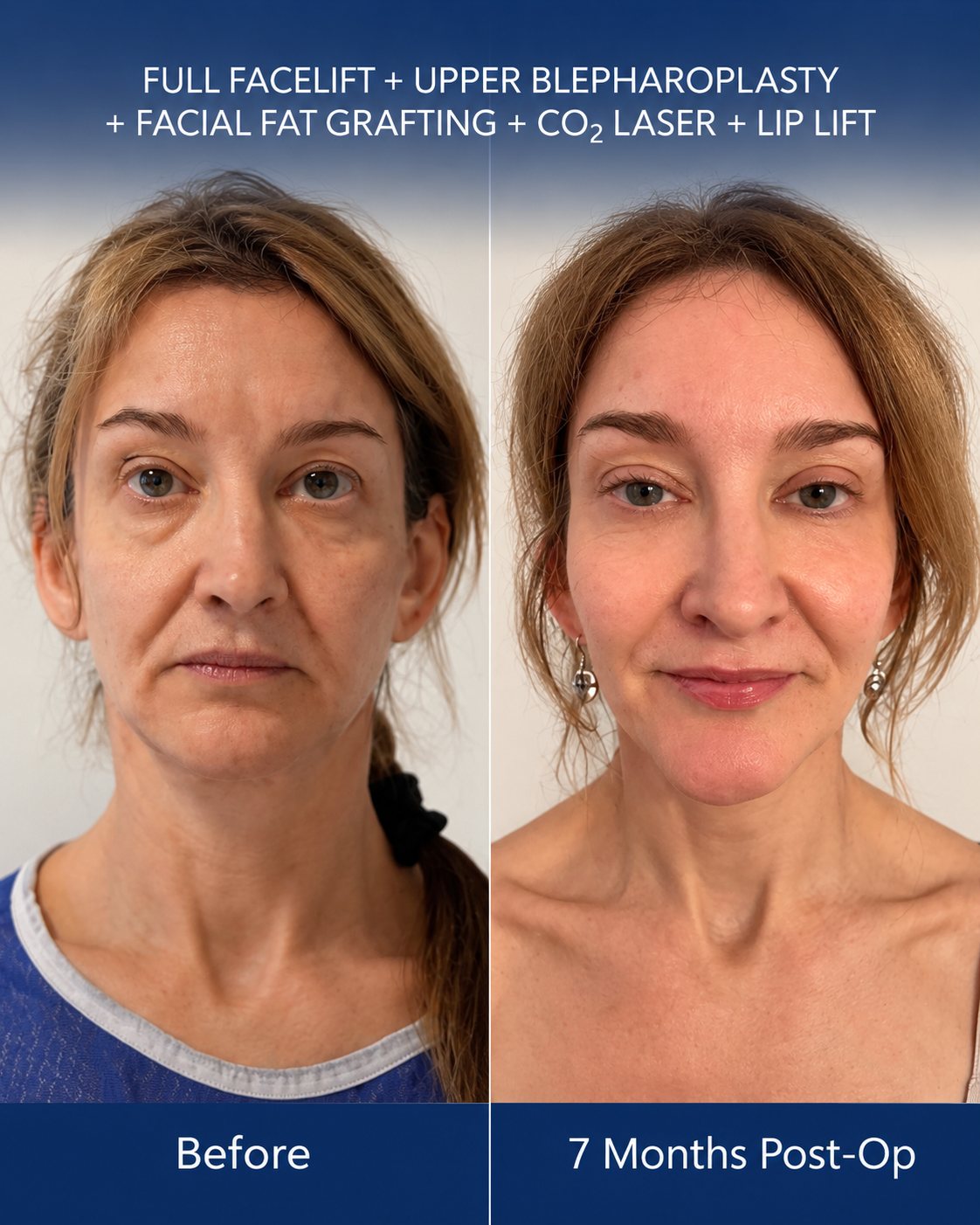
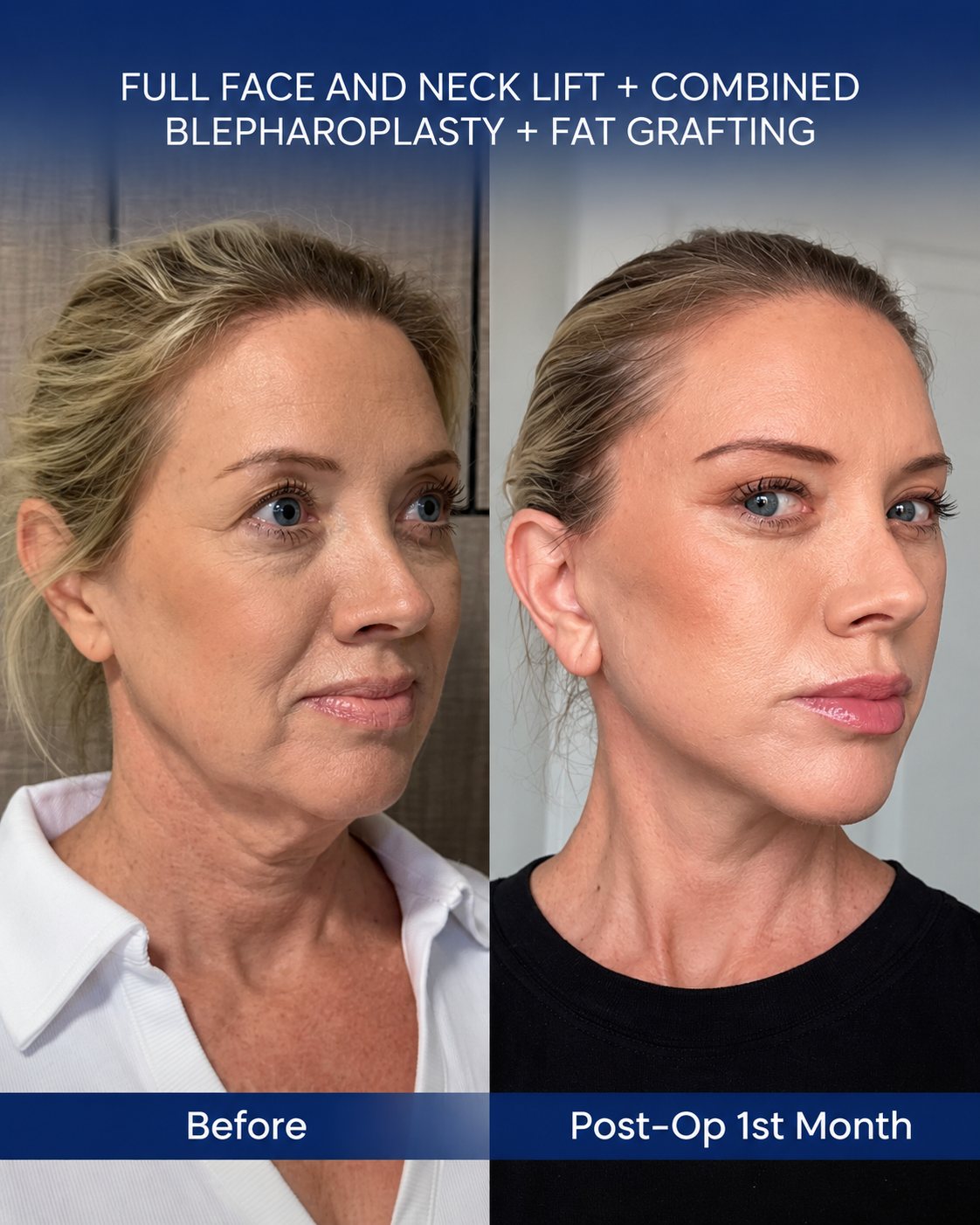
Deep plane facelift before and after
Every photo below is from a real patient treated by a surgeon in our network and is published with written consent. Results are individual — your outcome depends on your anatomy, the exact technique, and how healing progresses.
“I had been researching facelift prices for months, but every website seemed to give a different answer. The calculator was useful because I could choose the exact procedures I was considering and see what would normally be included in the package. After submitting my details, I received a more personalised estimate and information about the surgeon options. It gave me a much clearer idea of the total budget before deciding whether to travel to Istanbul.”
Deep Plane Face & Neck Lift
Price your deep plane facelift
Select the deep plane option in step one, set your surgeon-credential preferences, and receive one all-inclusive estimate matched to verified Istanbul surgeons.
Deep plane questions, answered
How much is a deep plane facelift in Turkey?+
A deep plane facelift in Turkey usually sits in the upper-end interval of $15,000–$20,000 all-inclusive. It is a longer, more technically demanding operation that requires a surgeon with dedicated deep-plane training.
How is a deep plane facelift different from a SMAS facelift?+
A SMAS facelift tightens the layer beneath the skin by folding or trimming it. A deep plane facelift works under that layer: the retaining ligaments are released so the skin, fat and muscle move together as one unit. The result is a more natural mid-face lift with less tension on the skin — and typically a longer-lasting outcome.
How long does a deep plane facelift last?+
Typically 10–15 years, longer than SMAS or mini techniques, because the deeper structures — not just the skin — are repositioned.
Who is a good candidate for a deep plane facelift?+
Patients with heavier mid-face descent, pronounced jowling, or laxity that has returned after an earlier lift. Younger patients with early jowls are usually better served by a mini or SMAS approach. Suitability is confirmed from your photographs and health history.
Is recovery worse than a standard facelift?+
The swelling phase is longer — expect two to three weeks before you feel presentable, versus about two for a mini lift. Pain is usually described as tightness rather than pain and is controlled with oral medication. Plan 7–10 nights in Istanbul.
How do I know a surgeon is truly trained in the deep plane technique?+
Ask three things in writing: where they trained specifically in deep-plane dissection, their annual deep-plane case volume (not total procedures), and unedited before-and-after sets at day 1, month 3, month 6 and year 1. We verify all three before recommending anyone for this technique.
Is a deep plane facelift in Turkey safe?+
It is safe when the surgeon is board-certified in plastic surgery, has documented deep-plane training, and operates in an internationally accredited hospital with a dedicated anesthesiology team. Price should never be the first filter; credentials should.
Why do patients travel to Turkey for a deep plane facelift?+
The same deep plane technique costs three to four times more in the US or UK, where the surgeon's fee alone often exceeds an entire Turkish package. Istanbul offers lower facility and staffing costs without lowering standards — the hospitals are accredited and the surgeons are board-certified.
Important: this guide is for planning only. Technique suitability and final pricing are confirmed after the surgeon reviews your photographs and health history. Prefer to talk it through? Message us on WhatsApp.
Medically reviewed by Dr. Safa Manav, MD, FEBOPRAS, Facial Rejuvenation Plastic Surgeon · Last reviewed August 2026